
Article by ShortDot
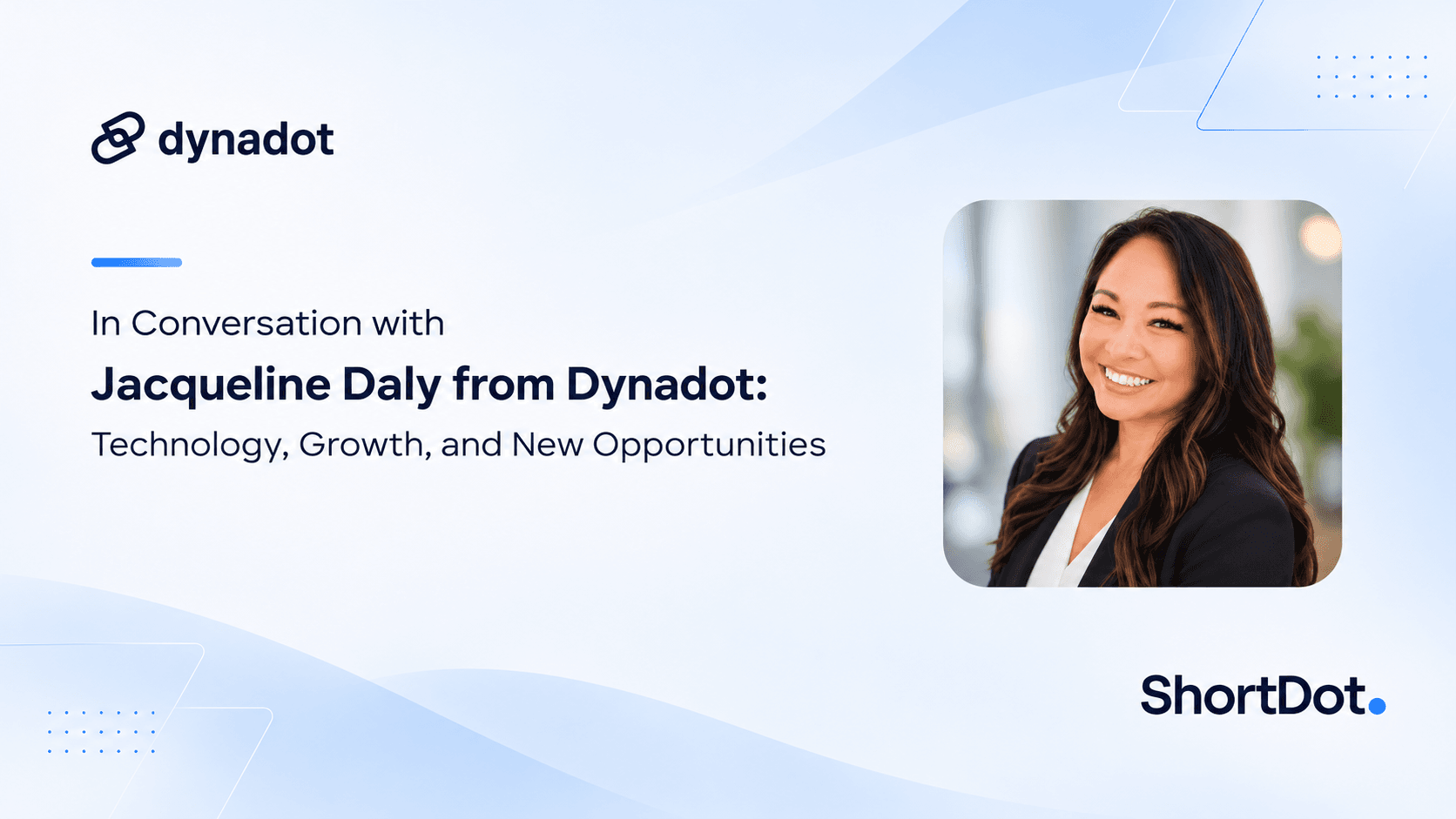
In Conversation with Jacqueline Daly from Dynadot
Nov 18 • 10 min read
1. Congratulations on your promotion to Senior Vice President and General Manager! How did you find your way into the domain industry, and what is the biggest lesson from your career that you are taking into your new role?
I actually kind of stumbled into the domain industry! After university, I moved to Silicon Valley because I was excited about technology and wanted to be at the forefront of everything happening there. When I interviewed at Dynadot, I knew very little about domain names, but the idea of working in an industry that's such a fundamental part of the internet was really exciting to me.
Dynadot was a very small team back then, just six people, but I instantly connected with everyone, including Todd, our founder. One of the things I've loved most about my career is getting to work alongside talented, ambitious people who genuinely enjoy working together to build something great. It's been incredible to see how far we've come.
The biggest lesson I've learned is the importance of adaptability. Technology is constantly evolving, and the domain industry is no exception. You have to be willing to embrace change, challenge the way things have always been done, and pivot when necessary. I think that's been a big part of Dynadot's success, and it's something I'll continue to prioritize in my new role.
2. How have businesses' views on newer domain extensions changed during your time in the industry, and what still holds them back from choosing one?
In my experience, we've seen a real shift in how businesses view new domain extensions. When they first launched, there was a lot of hesitation, and most businesses still felt they needed a traditional extension like .COM. Today, there's much more awareness and acceptance of alternatives.
We certainly see that growth in our registration numbers at Dynadot, but what I find even more interesting is how often I come across new top-level domains (TLDs) in everyday life. I'm seeing them on advertisements, storefronts, and businesses of all sizes. They're becoming a much more natural part of the internet.
To me, the biggest hurdle is still awareness and familiarity. A lot of businesses simply don't realize how many options are available to them, or they default to what they know. But as more successful brands adopt newer extensions, I think that hesitation will continue to fade.
3. Based on lessons from the last round, what should the industry do differently in the 2026 round of new generic top-level domains (gTLDs), and how can Dynadot help new extensions reach the right customers?
One of the biggest lessons I took from the last round is how important marketing and brand building are to a TLD's success. Simply launching a new extension isn't enough. With so many options available, you need to give customers a reason to choose yours.
The internet is incredibly diverse, and there's room for extensions that serve all kinds of industries, communities, and use cases. But to succeed, registries need to clearly communicate who their extension is for and why it's relevant to that audience.
I see the 2026 round as an opportunity to be much more intentional about that from the beginning. Rather than focusing solely on registration volume, registries should invest in building awareness, developing their brands, and driving meaningful adoption.
At Dynadot, we can play an important role in connecting these extensions with the right customers. Between our global customer base, marketing channels, and partnerships, we have opportunities to help registries reach their target audiences through more focused campaigns, promotions, and education.
4. How has artificial intelligence (AI) changed the adoption of new domain extensions and where do you see AI creating new demand for domains? How is Dynadot adapting to the way people find, register, and use them?
For me, one of the most interesting ways AI is impacting the domain industry is through domain discovery. Traditionally, people would start by searching for a specific name, usually with a particular extension in mind. AI is changing that process by helping people discover names that fit their brand or business, regardless of the extension.
That's a huge opportunity for new TLDs because it introduces customers to options they might never have considered otherwise.
We're already seeing this shift at Dynadot. More customers are discovering and registering domains through our AI-powered search tools, and we're also seeing AI companies integrate domain search and registration directly into their own platforms using our application programming interface (API) and Model Context Protocol (MCP) tools.
I think this is just the beginning. As AI makes it easier to launch businesses, build websites, and create digital products, it will also create more opportunities for domain registrations. Our focus is on making sure Dynadot is accessible wherever that process happens, whether that's directly on our website or through an AI-powered platform.
5. For a business choosing between a standard domain and a premium name, what should guide that decision, and what do buyers often overlook about pricing and renewals?
I think there are pros and cons to both, and ultimately it comes down to what's right for your business and your budget.
Premium domains typically command higher prices for a reason. They're often shorter, more memorable, or more brandable, which can make them valuable assets for a business. But with so many TLD options available today, there are also plenty of great standard-priced domains that could be a perfect fit.
My advice is to focus on finding a name that represents your brand and is easy for customers to remember, rather than feeling like you have to spend a lot of money to get started. If your ideal premium domain isn't in your budget today, you can always look at upgrading in the future as your business grows.
One thing I always encourage buyers to pay attention to is renewal pricing. Some premium domains have a higher upfront purchase price but standard renewal fees, while others carry premium renewal pricing as well. It's important to understand the long-term cost before making a decision.
6. What are the biggest hurdles customers face after registering a domain, and how are Dynadot's website builder, email, and logo tools helping them turn that domain into an active online business?
One of the biggest hurdles I see is simply knowing what to do next. Registering a domain is exciting, but turning that domain into an actual online presence can feel overwhelming, especially for someone launching their first business.
The good news is that technology has made this process so much easier than it used to be. You no longer need to be a developer or designer to build a professional-looking website and establish your brand online.
At Dynadot, we've been focused on making that next step as simple as possible. We're integrating AI into our tools to help customers create websites, develop their branding, and get online faster. Our website builder, email, and logo tools are designed to make it easier for customers to go from having a domain name to having a complete online presence.
Ultimately, we want to help customers do more than just register a domain. We want to give them the tools and confidence to turn their ideas into something real.