
Article by Burkhard Berger
How To Effectively Scale A Startup In 2026 + Examples
Apr 17 • 29 min read
When Is Your Startup Ready To Scale? Getting The Timing Right
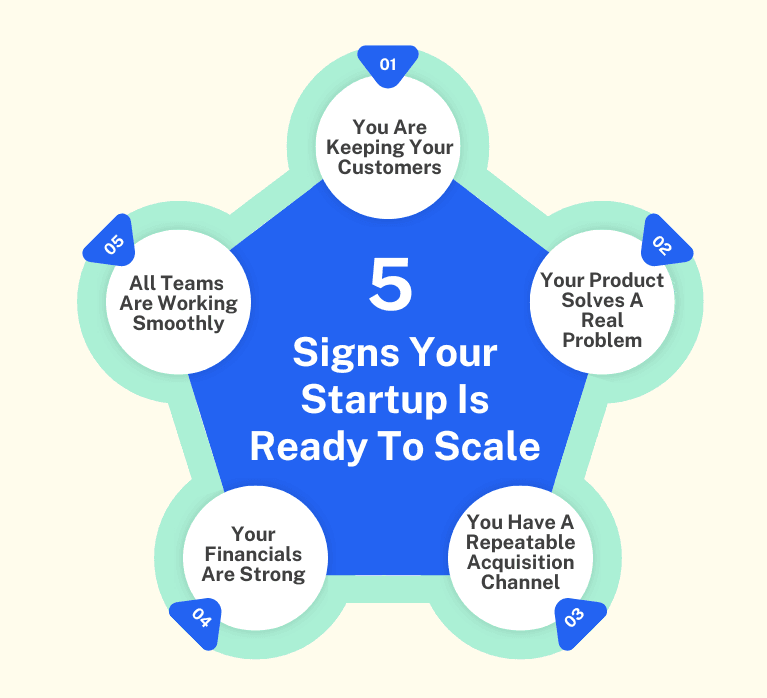
Heres the question most founders wrestle with, but usually way later than they should: Are we actually ready to scale? Of course, it is tempting to jump into growth the second you see traction. But scaling too early is one of the fastest ways to kill a startup. So, lets break down what ready really means.
1. You Are Keeping Your Customers
Early traction is great. But retention is what matters.
Are people sticking around? Are they coming back? Referring others? Paying again? If your growth depends entirely on a new customer base and not repeat usage or referrals, you are not ready yet. Scaling with a leaky bucket means you will just spend more to lose more.
What to look for:
- Consistent usage: People use your product or service regularly without you begging them.
- Low churn: They are not ghosting after one use.
- Positive feedback: Word-of-mouth is starting to kick in.
2. Your Product Actually Solves A Real Problem, And People Are Saying It
You need more than just a few people liking it. You want clear signs that people need it. That they would actually be mad if you shut it down tomorrow.
Heres what that looks like:
- Customers are telling you it has become a core part of how they work or live.
- You are hearing things like, This is exactly what I was looking for or It is impossible to go back to how we did it before.
- You are not just pushing your product; people are pulling it from you.
3. You Have A Repeatable, Predictable Acquisition Channel
You cant scale if every new customer still depends on you personally chasing them down. At some point, the hustle has to turn into a system. One where smart, repeatable digital marketing strategies (paired with whatever is already working referrals, SEO, cold email, paid) bring in leads and move them down the funnel without you stepping in every five minutes.
That means:
- You know where your best leads are coming from.
- You can estimate how much it costs to get them.
- You can turn that channel on and off like a faucet.
4. You Have A Strong Grip On Your Financials
Scaling means more spend. More tools, more inventory, more burn. If your financials are messy, that is a disaster waiting to happen.
You dont need a CFO yet, but you do need:
- A clear idea of your unit economics (CAC, LTV, margins).
- A budget that is not based on feelings.
- A runway that lets you take risks without risking survival.
5. Support, Ops, & Delivery Are Already Working Smoothly
Before you add volume, make sure the engine isnt already coughing.
Scaling = multiplying your workload. If your onboarding takes weeks, if support tickets go unanswered, or if your product delivery is shaky, that is only going to get worse when you grow.
Check:
- Are customers consistently getting what they were promised?
- Are support issues being resolved fast and well?
- Is your internal ops team swamped already?
This part is perhaps the most important of all. And it applies to every startup no exceptions. Because once you scale, any cracks in your delivery, support, or backend turn into full-blown fires. If things are already slipping when you have 100 customers, what happens when you have 10,000?
And this gets even more serious for luxury eCommerce stores like this premium diamond chain brand. It is a space where customer expectations are through the roof.
If the product packaging doesnt match what was promised or if customer queries about authenticity or sizing go unanswered, it instantly hurts trust. Obviously, when customers are spending thousands on luxury pieces, every small detail matters.
That is why if your startup handles high-value, reputation-sensitive products, your support and logistics setup must be airtight from day one. Quick resolutions, accurate tracking, secure delivery, and responsive communication are the bare minimum.
What seems like a small operational miss now could cost you repeat buyers and brand credibility later. This is your foundation fix the creaks while they are still small.
How To Scale A Startup: 10 Proven Strategies That Work
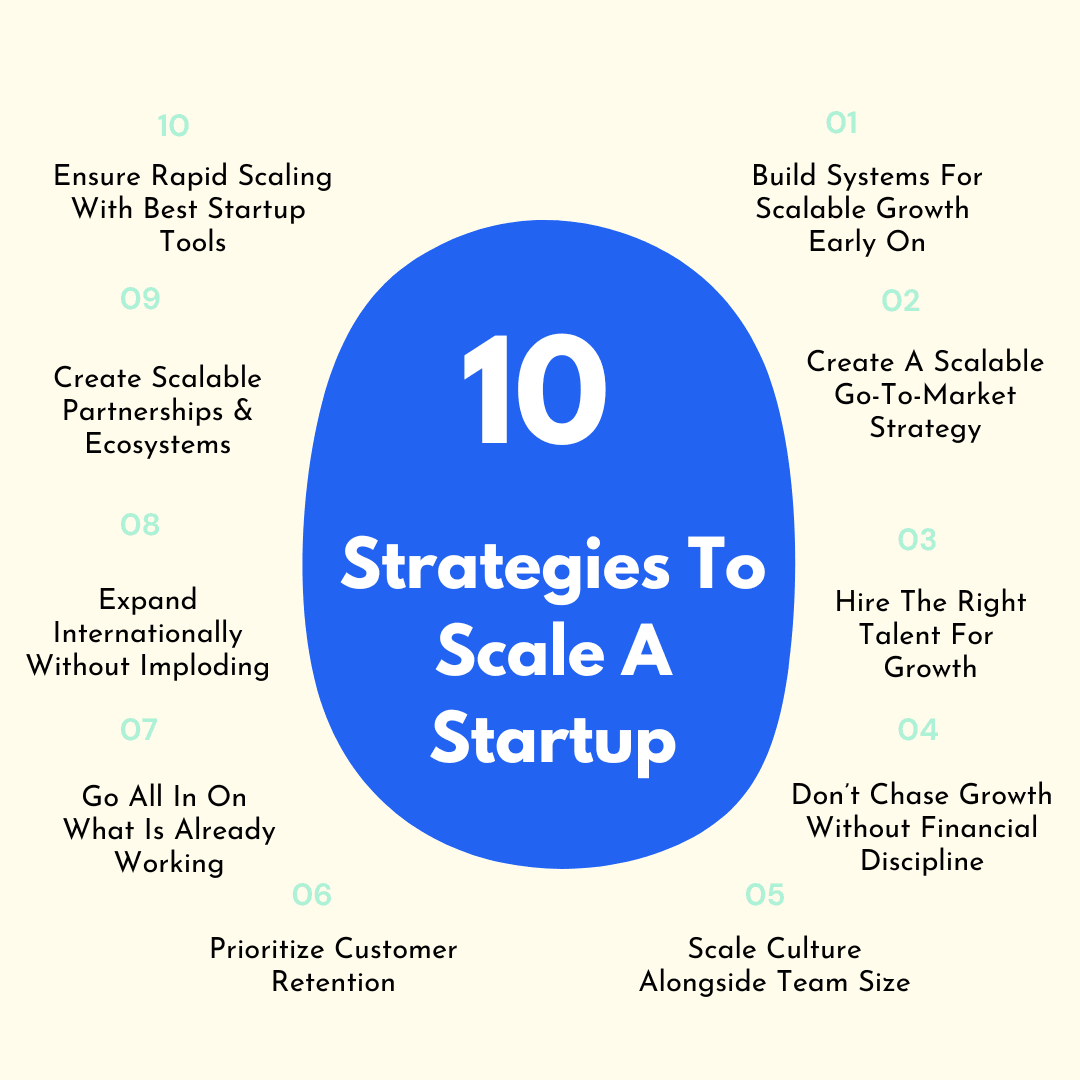
Lets walk through 10 core strategies you need to have in place before you step on the gas.
1. Build Systems For Scalable Growth Early On
Heres what happens to most startups you duct tape everything at the start to move quickly, and that is totally fine. But then you forget to replace the duct tape with real systems. And the second you scale, things break.
You want to build a business model with systems that can handle 10x the volume before you actually have it. That way, business growth just flows.
How to do it:
- Pick 3 repetitive tasks you are doing manually and automate them this week (e.g., onboarding emails, lead routing).
- Document your core workflows using Loom or Notion so new hires can follow them without bugging you.
- Switch to tools that scale HubSpot over spreadsheets, Slack over group texts, ClickUp over sticky notes.
- Set clear internal KPIs and dashboards now, even if it is just you + 2 others.
- Do a systems audit every 90 days whats breaking, what needs upgrading, whats redundant?
2. Create A Scalable Go-To-Market Strategy
Most early growth happens because of the founders hustle cold DMs, personal intros, manual demos. But you cant scale what only you can do.
You need strategies that bring in leads and convert them without you touching everything. That is the difference between a growing business and grinding.
How to do it:
- Identify your top-performing channel (organic, paid, outbound, referrals) double down on that first.
- Build a simple funnel. Awareness Interest Sign-up Close. Know what happens at each step.
- Grow your social presence and engagement the same way you grow your pipeline. Use creator partnerships and brand storytelling to turn your audience into active followers who engage and share.
- Track conversion rates at every growth stage so you know exactly where leads drop off, and stop wasting spend on what is not working.
- Hire or outsource parts of the GTM process (ads, outbound SDRs, onboarding) and hand them the system, not just random tasks.
3. Hire The Right Talent For Growth, Not Just Need
Early hires are usually made in a panic We need someone now. But if you are scaling, every hire should move you closer to the future you are building, not just help you survive the next few months. That means hiring the right talent who builds bridges even with limited resources.
How to do it:
- Before you even start thinking of hiring, write down where your company would be in 12 months what roles will matter then?
- Prioritize generalists who can handle a mix of roles now, but grow into specialists later.
- Avoid hiring just to reduce your own workload hire more employees to expand capacity.
- Come up with a proper hiring and retention strategy before you scale great people leaving too early hurts way more than hiring late.
- Keep your hiring bar high. Dont rush just to fill a role look for high performers who understand your companys mission and can grow with the company.
4. Dont Chase Growth Without Financial Discipline
It is really easy to get carried away once the revenue starts coming in. You are thinking, We are finally making money time to go big. So you start hiring fast, upgrading tools, doubling ad budgets, maybe even moving into a cool office.
But growth without control burns startups to the ground.
Scaling does mean spending, but it has to be intentional. Every dollar should push you closer to a clearer path to profitability or meaningful gains in market share.
How to do it:
- Track your burn rate weekly. Know exactly how many months of runway you have left.
- Calculate CAC, LTV, and payback period if you dont know them, you have no clue what is actually going on.
- Tie every big expense (hires, tools, campaigns) to a sustainable growth outcome no outcome, no spend.
- Build a basic cash flow forecast for the next 612 months. Doesnt need to be fancy, just real.
- Bring in a financial analyst to keep your numbers tight and your strategy grounded, especially as budgets get bigger and faster.
5. Scale Culture Alongside Team Size
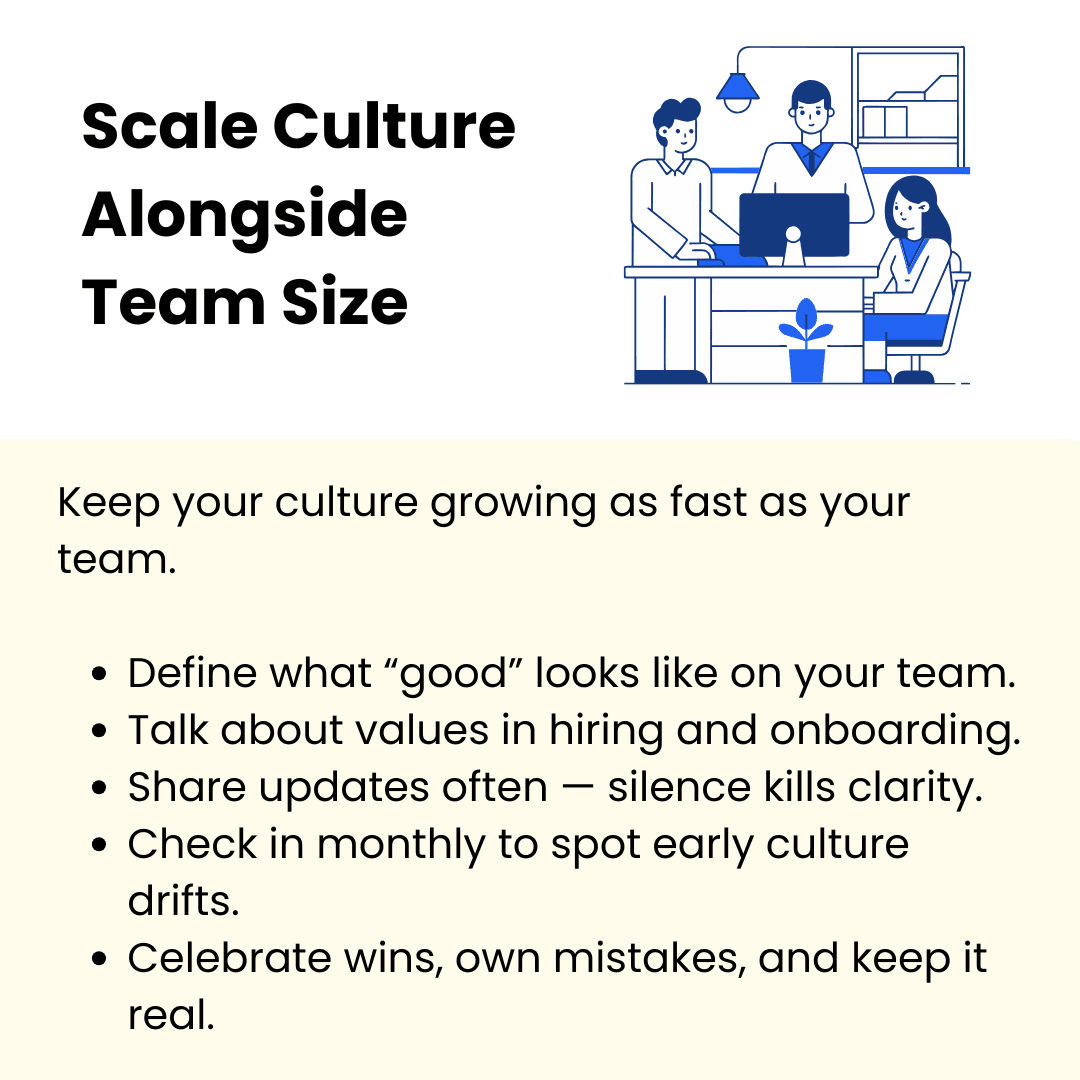
Culture isnt just about happy hours or Slack emojis. It is how your team communicates, makes decisions, solves problems, and treats each other when things go south. And as you grow, your culture will shift, whether you shape it intentionally or not.
If you ignore it, it will start slipping into too many silos and slow decisions territory. But if you build it on purpose, culture becomes a massive unfair advantage and puts you in a strong position.
How to do it:
- Write down your big musts what behaviors and values are musts on your team?
- Share those values early and often in hiring, onboarding, and 1:1s.
- Overcommunicate during growth spurts people need context from the management.
- Set up feedback cycles (like monthly team health check-ins or retros) to catch cultural cracks early.
- Celebrate wins and model accountability both decide how people show up as you scale.
6. Prioritize Customer Retention
Heres a rule that never fails it is way cheaper to keep a customer than to find a new one. But so many startups obsess over acquisition while their existing customers quietly slip away. That is a leaky funnel, and it will kill your future growth.
How to do it:
- Set up a churn tracking system who is leaving, why, and at what point.
- Build a simple customer success process check-ins, onboarding support, feature guidance.
- Develop a feedback system. Send NPS or quick check-in surveys every 6090 days.
- Identify power users and turn them into evangelists testimonials, referrals, even beta groups.
- Reward loyalty to keep them engaged. Offer account reviews, upgrades, or early access for long-term customers.
7. Go All In On What Is Already Working
Founders in the startup world get bored. It is just how our brains work. You find something that is performing well, and rather than leaning into it, you start chasing shiny new ideas new channels, new markets, new features. But that dilutes your momentum.
If something is working, your best move is to do more of it until it stops. Scaling is about pouring fuel on what is already catching fire.
How to do it:
- Review your last 3 months of growth which segment, feature, or channel is performing best?
- Redirect the budget and team to amplify that one thing.
- Build expansion guides for the proven model how to copy-paste it to similar markets or use cases.
- Delay new product ideas for 30 days give yourself space to fully extract value from the existing products.
- Set a metric to track the success of the doubled-down growth strategy (e.g., conversion rate, LTV, sales velocity).
8. Expand Internationally Without Imploding
Going global sounds exciting more customers, bigger market, investor funding. But done wrong, it is a fast way to burn cash and confuse your operations. Expansion is hard. Different regulations, taxes, time zones, buying behaviors it is a lot.
So dont expand just because you can. Expand because you are pulled into a new market that is clearly ready for what you have already proven works.
How to do it:
- Start with inbound demand where are people already finding you internationally?
- Run a lean pilot in one new market to measure the potential impact (localized landing page, support in local time zone, test pricing).
- Use a local partner or contractor to de-risk the expansion before hiring a full team.
- Make sure legal and compliance are scoped before you acquire customers.
- Localize only what needs to be localized. Dont redo your entire system if 80% still works.
9. Create Scalable Partnerships & Ecosystems
You can only do so much alone. The smartest founders find ways to plug into other companies audiences and distribution channels to support increasing scale.
Partnerships let you reach more customers and expand faster than you could by yourself. And ecosystems create compounding value over time.
How to do it:
- Identify 3 companies already serving your target customer brainstorm ways to collaborate.
- Set up a basic partner onboarding document value proposition, how it works, revenue share (if any).
- Build one native integration with a tool your customers already use. It makes your product harder to leave.
- Pitch co-marketing opportunities joint webinars, newsletters, bundles, templates, etc.
- Create a partner manager role to actually nurture these relationships long-term.
10. Ensure Rapid Scaling With The Best Startup Tools
The truth is, you cant scale efficiently if your backend is a mess and your team is doing manual work. The good news is you dont need to build everything from scratch anymore. There is a tool (actually, like 10) for everything now, and cloud computing has made it insanely easy to move faster without throwing more people at the problem.
But most founders either over-tool (chasing shiny software and wasting budget) or under-tool (sticking with spreadsheets and chaos way too long). The goal isnt to get whatever is trending. You need SaaS tools that make sense for your business.
How to do it:
- Audit your current tool stack. Keep what gives ROI, cut the rest.
- Automate repeat stuff using Zapier or native automations in HubSpot, Notion, etc.
- Pick tools that integrate well. If two platforms dont talk to each other, someone on your team ends up doing that job manually.
- Get serious about data use something like Google Looker Studio or Mixpanel to track what is working and where to focus.
- Dont overpay early. Most top-tier eCommerce tools have startup credits. Use them. Stretch them.
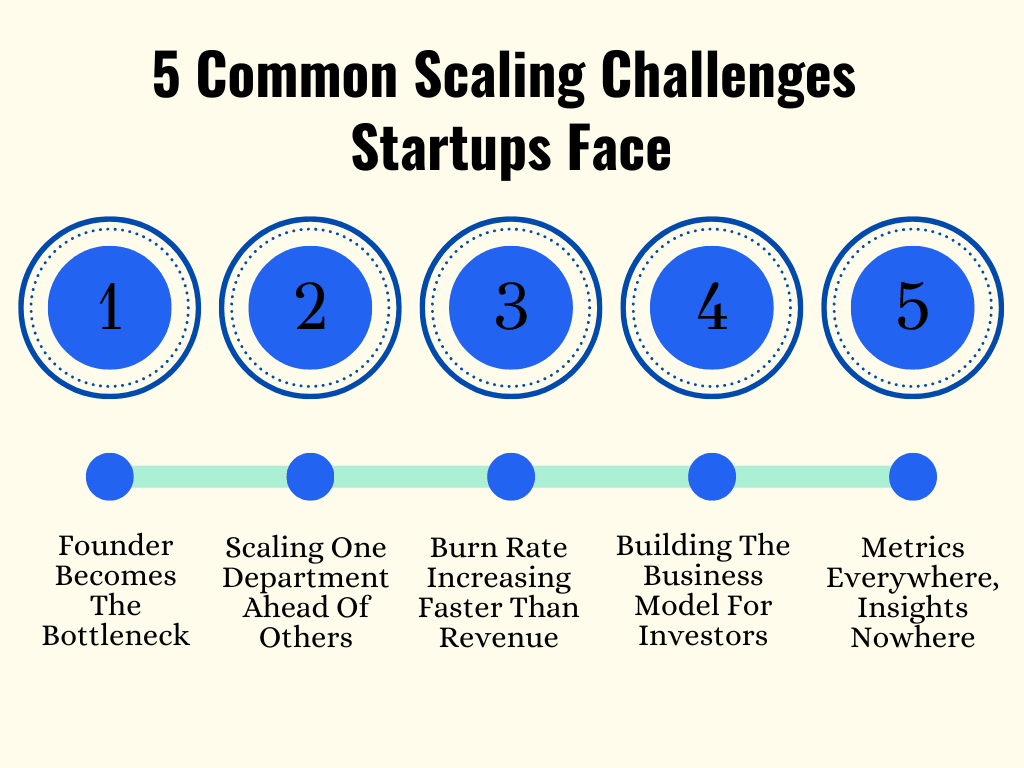
5 Common Scaling Challenges Startups Face & How To Handle Them
Most of the startup pain isnt from growing it is from growing unevenly or without the right systems. These scaling challenges are common, and you can totally avoid them once you know what to look for. Lets walk through the big 5 common challenges that scaling startups face, and how you can handle them.
1. Founder Becomes The Bottleneck
In the early days, you are in everything. Sales calls, product tweaks, hiring, support tickets it all runs through you. But as the company grows, this stops being heroic and starts becoming a problem.
If decisions and progress still depend on you, you are holding the whole thing back. You want to build yourself out of the center, not become the single point of failure.
How to handle it:
- Hire business leaders, not helpers. Bring on people you trust to own things, not just help out.
- Start documenting how things get done, even if it is rough.
- Make yourself unnecessary in one part of the business every quarter, and track your exits.
2. Scaling One Department Ahead Of Others
Maybe you bulked up sales but didnt touch support. Or the product team is shipping faster than your infrastructure can handle. Scaling one part of the machine while the rest stays in startup mode is how cracks form.
You want balanced growth without added complexity. Otherwise, the whole system tilts and starts to break under pressure.
How to handle it:
- Map out your customer journey and identify where growth is creating friction (e.g., support tickets piling up, onboarding slowing down).
- Run monthly ops reviews across all departments, not just the flashiest ones.
- Set hiring ratios (e.g., one customer success hire for every X new accounts) to prevent uneven scaling.
3. Burn Rate Increasing Faster Than Revenue
Growth feels good, so you start spending more. But if your revenue isnt catching up fast enough, your burn creeps up. And then suddenly runway panic.
Rapid scaling without financial discipline = scaling toward a cliff.
How to handle it:
- Track burn rate and runway monthly, no exceptions.
- Set a default alive checkpoint every quarter: If you stopped raising money today, how long would you last?
- Tie big expenses (like new employees or ad budgets) to growth targets no we will figure it out later logic.
4. Building The Business Model For Investors Instead Of Customers
When you are raising rounds, it is easy to get caught in the trap of building flashy features for pitch decks or chasing metrics that sound good in meetings but dont matter to your users.
It might help in the short term, but it pulls you away from product-market fit and real traction. Build for your customers. The capital will follow.
How to handle it:
- Talk to users every week seriously. It keeps your priorities grounded in reality.
- Prioritize roadmap features by user value, not slide deck appeal.
- Before chasing a new metric, ask: Will this help us serve customers better, or just look good in a report?
5. Metrics Everywhere, Insights Nowhere
As you grow, dashboards start growing like weeds. Everyone is tracking something churn, MRR, DAUs, retention cohorts, NPS, pipeline velocity but no one is quite sure what matters most.
Too many metrics = analysis paralysis. You want clarity, not just data.
How to handle it:
- Pick 35 core metrics that actually show health and growth, and align the team around them.
- When running ads, make sure that performance data from platforms like Google Ads and the BM2500 Facebook Ads account ties back to those same core metrics not vanity stats like clicks or impressions.
- Set up a single dashboard that everyone uses. Not 17 versions in different tools.
- Create a metrics owner for each key number someone responsible for watching, interpreting, and acting on it.
3 Real Startup Scale-Up Stories (With Lessons You Can Apply)
These are real startup scale-up moments, with the messy middle included. The wins, the mistakes, and the smart lessons you can actually learn from.
1. CodaPet Scaling With Compassion & Trust

When CodaPet started, it was a small team with a deeply emotional mission to make in-home pet euthanasia more compassionate and accessible for families. The founders saw that many pet owners dreaded the stress of clinic goodbyes and wanted something gentler for their pets final moments.
Rather than expanding fast, they built local trust city by city. They partnered with licensed veterinarians and made online booking simple. Once families began sharing heartfelt stories and reviews, organic growth took off. What started as a niche idea is now helping thousands of families in multiple states, with a growing network of vets offering the same standard of care.
Lessons to apply:
- Start small, but deliver deeply meaningful value.
- Build trust before scale reputation compounds faster than ad spend.
- Let real customer stories power your growth.
2. EXT Cabinets Building Growth, One Outdoor Kitchen At A Time

EXT Cabinets started small just a couple of people designing outdoor kitchen cabinets for homeowners who wanted something better than the generic big-box options. The team didnt chase scale right away. They focused on one thing premium, weatherproof cabinets that actually look like high-end indoor ones.
Word-of-mouth carried them early on, but real growth came when they invested in their online store and started showing full outdoor kitchen setups with clear specs, pricing, and custom design options. That honesty and clarity clicked and before long, curious visitors became buyers with a vision for their backyard.
Lessons to apply:
- Perfect the product before chasing scale. Real-world feedback is your best data.
- Stay close to your early customers they point you toward your next big step.
- Quality and consistency outlast flashy marketing every single time.
3. Sewing Parts Online Growing By Serving Serious Makers
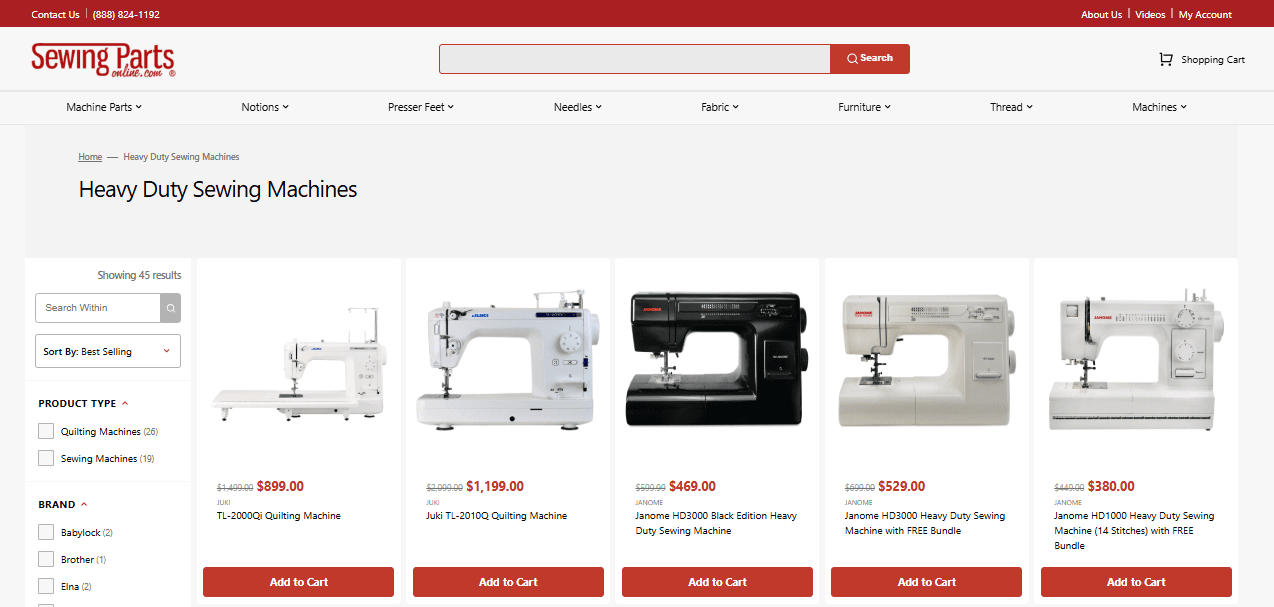
Sewing Parts Online started as a small team helping hobbyists find replacement parts that local stores didnt stock. Over time, they noticed something experienced sewists were looking for machines built to handle real work, not flimsy consumer models. That is where their shift toward heavy-duty sewing machines began.
Instead of going broad, they went deep. They curated machines from trusted brands and added side-by-side comparisons and setup guides so buyers could see exactly what they were getting into. That mix of real product knowledge and customer support built a loyal following especially among small businesses and upholstery shops that depend on reliability.
Lessons to apply:
- Listen to what your customers are struggling with, then build around that.
- Make your product education part of your sales strategy.
- Trust and repeat purchases come from being genuinely helpful, not salesy.
Conclusion
How to scale a startup isnt something you pick up by watching someone else do it. It is a series of bets. Some will work, some wont. What matters is knowing when to push and when to rip things up and rebuild.
Scaling is about building better. Better systems, better people, better decisions. And if the wheels start wobbling, good it means you are moving fast enough to matter.
At ShortDot, we understand that. We have built and managed millions of domains, and we have seen what happens when brands go from small bets to big wins. That is why we make naming simple with domain extensions like .bond, .icu, and .cyou that actually stand out. If you are ready to take your next leap, start with a domain that moves as fast as you do.