
Article by Achet Walling
Domain Names and Brand Perception: How to Build Credibility from the First Click ( +Examples)
Jan 28 • 16 min read
Source: depositphotos.com

What’s the first thing that comes to mind when you think about branding and business growth? For the most part, owners developing such strategies gravitate toward a set list of steps for carving out a space for their companies in their target industries.
More often than not, these tactics include developing a visual brand identity, identifying their brand’s voice, establishing a consistent online presence, and investing in effective marketing strategies.
But here’s the thing. A surprisingly large number of business leaders forget all about domain names until it’s just about time to launch. Yet, skipping this part of brand building could prove to be a huge mistake — especially when you consider the impact domain names have on brand perception.
So, if you’re starting a business and want to make sure you’re doing things right from the get-go, here’s how to build credibility from the first click by choosing the right domain name for your organization.
Let’s get into it.
The Difference Between Brand and Domain Names
You probably already know this. Nonetheless, when learning new strategies you could use to grow your business, it’s good to start off with complete clarity.
So, what’s the difference between a brand name and your domain name?
Your brand name is your business’s identifier. It’s what you use in your logo, on social networks, marketing campaigns, and official communication.
Your domain name, on the other hand, is the website address your prospects can use to access your online presentation.
A domain name can contain your brand name (although it doesn’t have to). Additionally, a web address also contains a top-level domain extension, such as .com or any other variant that you choose when purchasing a domain.
In short, your brand name establishes your business’s identity. Your domain name is your online address. Both play a huge role in branding, marketing, and earning customer trust.
Why Domain Names Matter
If you’ve never thought about domain names, perhaps it’s time to start. If you think about it, you’ll find that they directly impact your brand’s reputation and your ability to earn consumer trust.
So, why is this the case? Well, there are five distinct ways in which domain names affect your branding and marketing strategies, as well as your capacity to penetrate markets.
Your Domain Name Is One of the First Things Your Audience Sees About Your Brand
Whether they discover you through search, social media, or through friends or colleagues, your prospects are bound to want to navigate to your website. One of the first brand touches they have with your business will include your domain name.
Now, research shows that consumers form brand impressions within as little as 50 milliseconds of landing on a website. And while the majority of these impressions are design-related, it’s worth noting that they will scrutinize your domain name (even if they do it subconsciously).
Why is this important? Well, it’s crucial to remember that first impressions directly influence consumers’ brand trust and purchase intent. So, you want to do your best to ensure that the first interaction goes well. Otherwise, your chances of converting a new customer could fall through.
A Domain Name Can Aid or Harm Brand Recall
In most industries, consumers don’t convert during their first brand interaction. Instead, they take their time in learning about and evaluating different solutions before they’re ready to make a decision.
Sometimes, this process can take a long time — particularly when it comes to buying big-ticket items or professional tools/products/services.
With this in mind, the last thing you want is for prospects to forget about your offer somewhere along their buyer’s journey.
One way to ensure potential clients recall your business and can easily re-engage is to choose the right domain name. So, when buying a domain, prioritize simplicity and memorability.
It’s a Key Aspect of Branding Consistency
Consistency plays a major role in earning your target audience’s trust. So, when aiming to build credibility, try to position your business as reliable and predictable.
One way to do this is, of course, to have a domain name that is consistent with your brand’s identity.
It’s a simple strategy for maximizing a sense of security. Plus, it prevents your target audience from getting confused about whether they’re in the right place when visiting your website.
When Keyword-Enhanced, Your Domain Name Can Additionally Boost SEO
Consumers usually begin their buying journeys on search engines. And they usually only click on the top 10 results on Google.
According to research, the clickthrough rate for position one is 10 times higher than for position 10.
With that in mind, it makes sense that enhancing your domain name with relevant keywords could be a simple way to boost SEO.
Your Domain Name Affects Your Brand’s Overall Credibility
Finally, your domain name affects your brand’s credibility. After all, risk-averse consumers are sure to scrutinize your domain name before visiting your website or making a purchase.
Furthermore, research suggests that consumers aren’t entirely comfortable providing personal information on sites using new gTLD (global top-level domains), indicating that the extension you use could also affect your ability to position your business as trustworthy.
7 Tips to Build Credibility with Your Domain Name
So, now that you understand how your domain name affects your brand’s reputation, let’s get into actionable strategies for building credibility with this aspect of your brand’s identity. Below, you’ll find seven easy-to-implement tactics, along with examples you can use to apply them to your own branding and credibility-building efforts.
Choose a Domain Name That Aligns with Your Brand’s Identity
One of the easiest ways to boost brand trust is to choose a domain name that aligns with your brand’s identity.
If you’ve approached your branding strategy right (and done some pre-launch competitor research), this should be relatively easy. You can simply use your brand name with the .com extension (or any other TLD relevant to your niche or market).
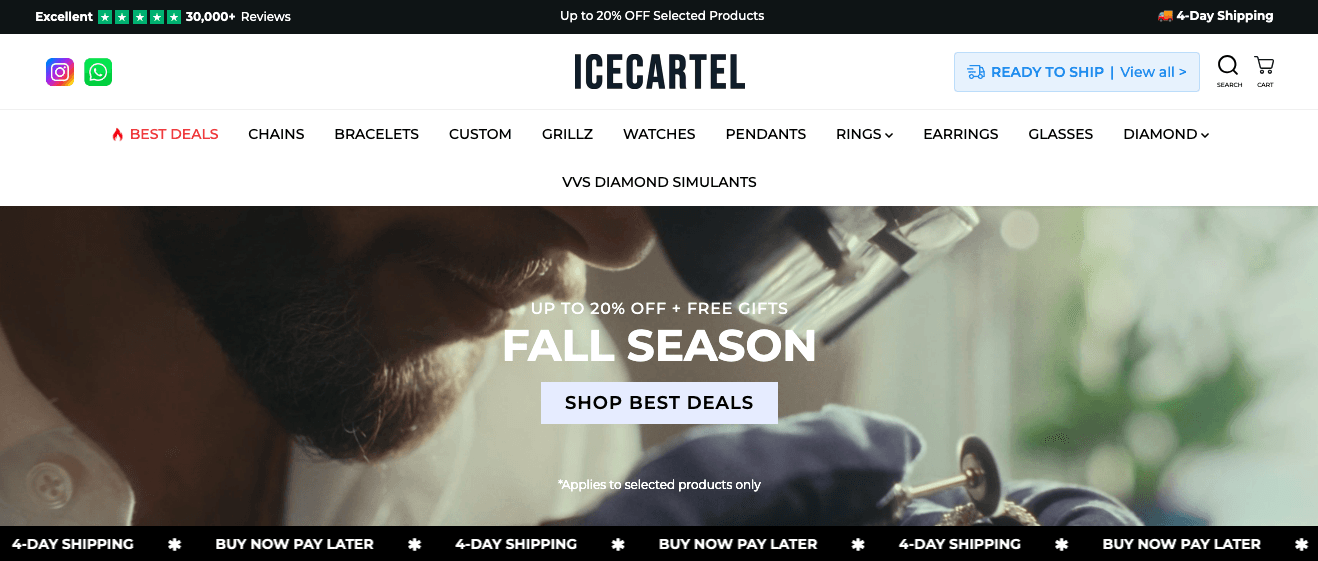
For instance, if you look at Icecartel, you’ll realize that its domain name establishes an excellent foundation for the company’s branding efforts, as it already communicates core brand characteristics like luxury, confidence, coolness, exclusivity, and a solid dose of edginess. Moreover, you’ll find that these characteristics are reinforced through the brand’s voice and visual identity, creating a high level of consistency that builds trust.
Source: icecartel.com
Ensure Consistency Between Your Domain Name and Social Media Handles
When building brand credibility, consistency is one of your most powerful tools.
That’s why one of the simplest ways to create a trustworthy and reliable brand reputation is to ensure your domain name and social media handles align.
Slight differences (like an additional word on socials) can be tolerated. But, in general, aim for a 100% match. This will make it far easier for prospects to find and engage with your business on the platforms they use daily.
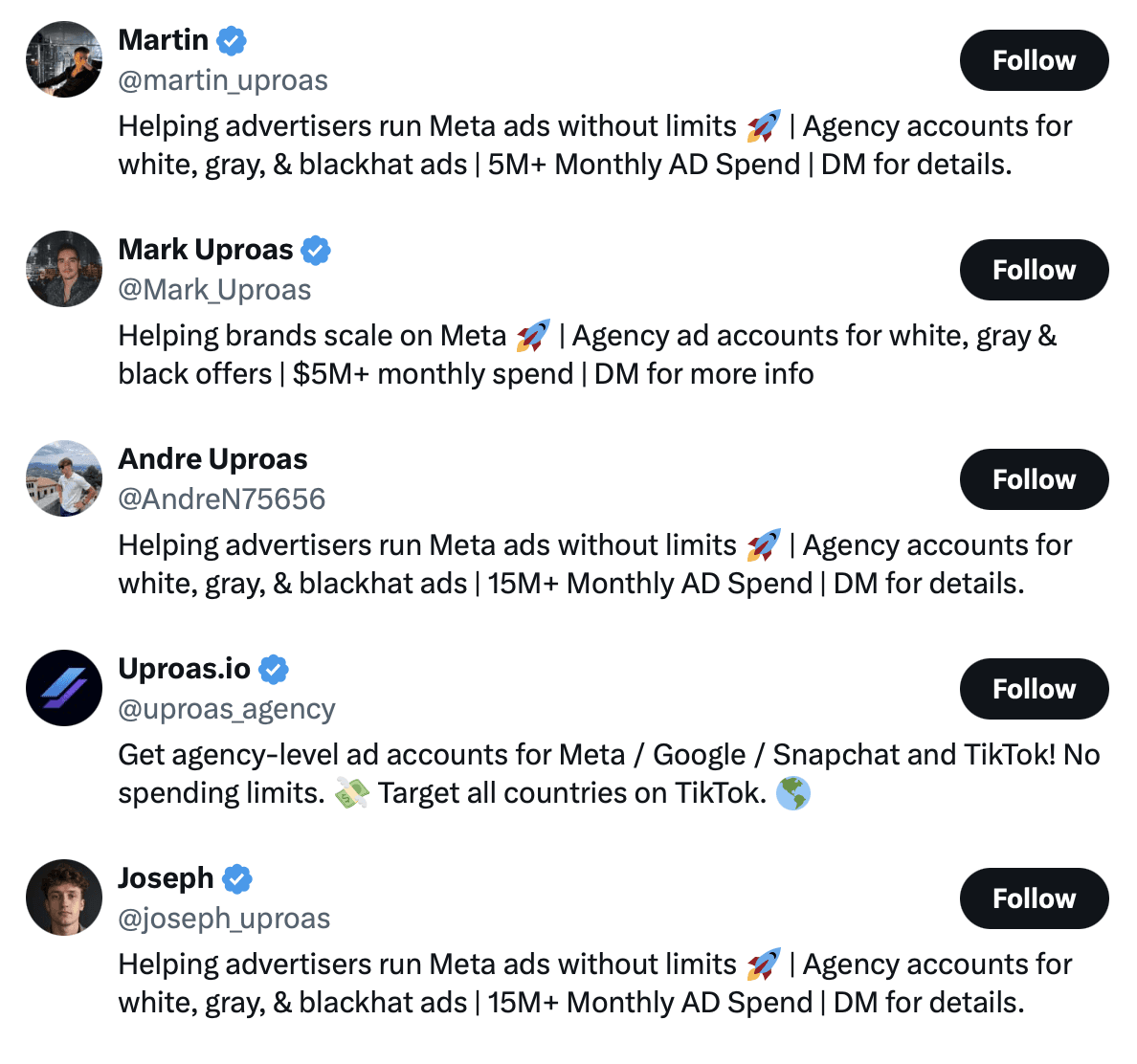
Uproas, for instance, is a good example of a business aligning its domain name with its social profiles — using just its brand name for LinkedIn and adding the word ‘agency’ on X for an added dose of clarity. Note how its employees also add the brand name to their X handles, creating additional credibility for the business, maximizing its reach, and making it easier for prospects to keep in touch.
Source: x.com
Avoid Domain Names That Are Too Long
Descriptiveness in a domain name can be a good way to explain what you offer to awareness-stage prospects. However, a web address that’s too long opens up space for confusion, misunderstandings, and poor memorability.
So, if you’re trying to raise brand awareness and earn your prospects’ trust, consider making your website address short and memorable.
Ultimately, a shorter web address will optimize your site for navigational intent. Plus, it’ll make it exceptionally easy for leads to interact with your business without having to search through Google beforehand.
For instance, the Donna Karan New York fashion brand uses the dkny.com domain (and logotype), knowing that it’s much easier to spell and use than the designer’s full name.

Source: dkny.com
Use TLD Extensions to Communicate Your Brand’s Area of Expertise
Legacy domain extensions (.com, .net, and .org) are great for boosting brand credibility. They’re generally more trusted than newer variants. And data shows that the .com TLD reigns supreme as the most popular extension on the internet, with 43% of websites using it.
However, the simple fact is that a legacy domain may not always be the best option for reaching your business’s branding goals. (Or, it may not be available when buying your domain.)
With this in mind, it’s not a bad idea to consider alternative TLDs that can communicate your brand’s area of expertise, location, or type of service you offer.
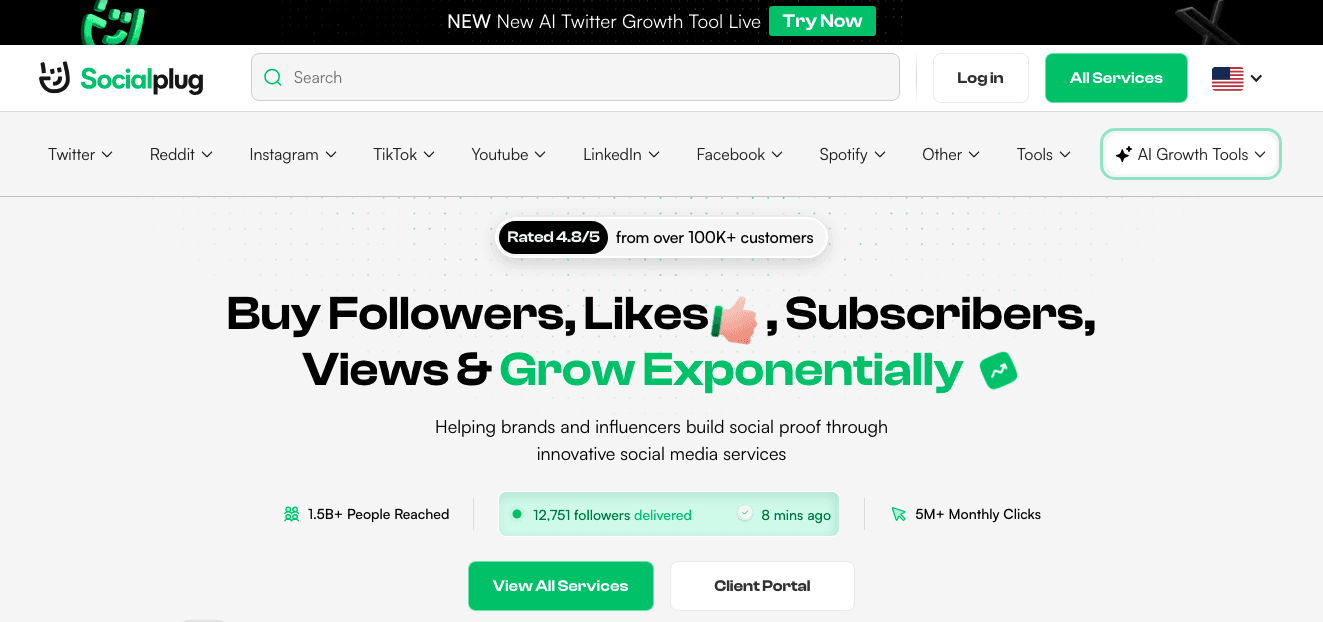
For instance, the .io extension in the Socialplug domain name clearly communicates that this is a tech-driven company that offers an innovative service.
Source: socialplug.io
Additionally, if possible, consider purchasing multiple TLD extensions for your domain name and directing all traffic to your homepage. That way, it’ll be super easy for prospects to find your website — without experiencing the frustration of landing on the wrong page.
Don’t Overlook Hidden Meanings
Sometimes, your brand’s name makes perfect sense. Until you put it in a domain name, and it takes on a whole new meaning.
Sure, examples like Therapist Finder, Experts Exchange, and Speed of Art may sound like unique instances of poorly thought-out domain names that sure won’t happen to you. (And that you can have a good laugh over.)
But, just to be on the safe side (and avoid alienating your target audience with the wrong message), make sure you check how your final choice looks to a fresh pair of eyes before spending your hard-earned budget on a name that’ll inevitably harm your reputation.
Add Relevant Keywords Where Natural
Enriching your domain name with keywords related to your products or services is obviously a great method to boost memorability and brand recall. On top of that, it can help your search engine optimization efforts, allowing you to rank higher on SERPs, helping you improve brand trust as well.
So, if possible (and natural), why not add relevant keywords to your domain name? If you check out Brain Ritual, you’ll find that the brand’s name (and domain) expertly describes the solution it sells — a patented medical food that improves brain health by targeting nutritional deficiencies associated with migraine.

Source: brainritual.com
Don’t Choose a Domain Name That Could Send Precious Traffic to the Wrong Address
Finally, when choosing a domain name for your business, remember that frustrating browsing experiences directly harm brand perception.
In fact, 88% of people won’t return to a website (or continue interacting with a business, for that matter) after a poor browsing experience.
So, if you wish to earn your prospects’ trust and get them to see your business in a positive light, do your best to prevent any potential UX issues that could arise in connection with your domain name.
Specifically, try not to choose a domain name that could send precious traffic to the wrong address. Also do your best to avoid domain names that are difficult to spell, as this could cause unnecessary frustrations for potential customers.
Final Thoughts
There you have it, seven super-simple tips for using your domain name to elevate brand perception and build credibility.
As you can see, most of these tactics are basic best practices for choosing the online address for your brand’s digital storefront. Nevertheless, paying attention to all seven will not only pay off but also ensure you avoid unnecessary issues that could harm your brand’s reputation. Plus, they could be an excellent first step in ensuring that your target audience has an exceptional brand experience that won’t just drive conversions but loyalty as well.